2011-09-20

Top Ten Lessons From Steve Jobs

Just read a great post from Eric Jackson.


http://www.forbes.com/sites/ericjackson/2011/09/19/the-top-ten-lessons-steve-jobs-can-teach-us-if-well-listen/

Steve Jobs, one of the great minds of the 21st century and will forever be cherished as one of the world's best CEO... Here are the lessons that Steve Jobs taught us in his active days...

Image Source http://www.21cb.net


1. The most enduring innovations marry art and science – Steve has always pointed out that the biggest difference between Apple and all the other computer (and post-PC) companies through history is that Apple always tried to marry art and science. Jobs pointed out the original team working on the Mac had backgrounds in anthropology, art, history, and poetry. That’s always been important in making Apple’s products stand out. It’s the difference between the iPad and every other tablet computer that came before it or since. It is the look and feel of a product. It is its soul. But it is such a difficult thing for computer scientists or engineers to see that importance, so any company must have a leader that sees that importance.

2. To create the future, you can’t do it through focus groups – There is a school of thought in management theory that — if you’re in the consumer-facing space building products and services — you’ve got to listen to your customer. Steve Jobs was one of the first businessmen to say that was a waste of time. The customers today don’t always know what they want, especially if it’s something they’ve never seen, heard, or touched before. When it became clear that Apple would come out with a tablet, many were skeptical. When people heard the name (iPad), it was a joke in the Twitter-sphere for a day. But when people held one, and used it, it became a ‘must have.’ They didn’t know how they’d previously lived without one. It became the fastest growing Apple product in its history. Jobs (and the Apple team) trusted himself more than others. Picasso and great artists have done that for centuries. Jobs was the first in business.

3. Never fear failure – Jobs was fired by the successor he picked. It was one of the most public embarrassments of the last 30 years in business. Yet, he didn’t become a venture capitalist never to be heard from again. He didn’t start a production company and do a lot of lunches. He picked himself up and got back to work following his passion. Eight years ago, he was diagnosed with pancreatic cancer and told he only had a few weeks to live. As Samuel Johnson said, there’s nothing like your impending death to focus the mind. From Jobs’ 2005 Stanford commencement speech:

No one wants to die. Even people who want to go to heaven don’t want to die to get there. And yet death is the destination we all share. No one has ever escaped it. And that is as it should be, because Death is very likely the single best invention of Life. It is Life’s change agent. It clears out the old to make way for the new. Right now the new is you, but someday not too long from now, you will gradually become the old and be cleared away. Sorry to be so dramatic, but it is quite true.

Your time is limited, so don’t waste it living someone else’s life. Don’t be trapped by dogma — which is living with the results of other people’s thinking. Don’t let the noise of others’ opinions drown out your own inner voice. And most important, have the courage to follow your heart and intuition. They somehow already know what you truly want to become. Everything else is secondary.

4. You can’t connect the dots forward – only backward – This is another gem from the 2005 Stanford speech. The idea behind the concept is that, as much as we try to plan our lives ahead in advance, there’s always something that’s completely unpredictable about life. What seems like bitter anguish and defeat in the moment — getting dumped by a girlfriend, not getting that job at McKinsey, “wasting” 4 years of your life on a start-up that didn’t pan out as you wanted — can turn out to sow the seeds of your unimaginable success years from now. You can’t be too attached to how you think your life is supposed to work out and instead trust that all the dots will be connected in the future. This is all part of the plan.

Again, you can’t connect the dots looking forward; you can only connect them looking backwards. So you have to trust that the dots will somehow connect in your future. You have to trust in something — your gut, destiny, life, karma, whatever. This approach has never let me down, and it has made all the difference in my life.

5. Listen to that voice in the back of your head that tells you if you’re on the right track or not – Most of us don’t hear a voice inside our heads. We’ve simply decided that we’re going to work in finance or be a doctor because that’s what our parents told us we should do or because we wanted to make a lot of money. When we consciously or unconsciously make that decision, we snuff out that little voice in our head. From then on, most of us put it on automatic pilot. We mail it in. You have met these people. They’re nice people. But they’re not changing the world. Jobs has always been a restless soul. A man in a hurry. A man with a plan. His plan isn’t for everyone. It was his plan. He wanted to build computers. Some people have a voice that tells them to fight for democracy. Some have one that tells them to become an expert in miniature spoons. When Jobs first saw an example of a Graphical User Interface — a GUI — he knew this was the future of computing and that he had to create it. That became the Macintosh. Whatever your voice is telling you, you would be smart to listen to it. Even if it tells you to quit your job, or move to China, or leave your partner.

6. Expect a lot from yourself and others – We have heard stories of Steve Jobs yelling or dressing down staff. He’s a control freak, we’ve heard – a perfectionist. The bottom line is that he is in touch with his passion and that little voice in the back of his head. He gives a damn. He wants the best from himself and everyone who works for him. If they don’t give a damn, he doesn’t want them around. And yet — he keeps attracting amazing talent around him. Why? Because talent gives a damn too. There’s a saying: if you’re a “B” player, you’ll hire “C” players below you because you don’t want them to look smarter than you. If you’re an “A” player, you’ll hire “A+” players below you, because you want the best result.

7. Don’t care about being right. Care about succeeding – Jobs used this line in an interview after he was fired by Apple. If you have to steal others’ great ideas to make yours better, do it. You can’t be married to your vision of how a product is going to work out, such that you forget about current reality. When the Apple III came out, it was hot and warped its motherboard even though Jobs had insisted it would be quiet and sleek. If Jobs had stuck with Lisa, Apple would have never developed the Mac.


8. Find the most talented people to surround yourself with – There is a misconception that Apple is Steve Jobs. Everyone else in the company is a faceless minion working to please the all-seeing and all-knowing Jobs. In reality, Jobs has surrounded himself with talent: Phil Schiller, Jony Ive, Peter Oppenheimer, Tim Cook, the former head of stores Ron Johnson. These are all super-talented people who don’t get the credit they deserve. The fact that Apple’s stock price has been so strong since Jobs left as CEO is a credit to the strength of the team. Jobs has hired bad managerial talent before. John Sculley ended up firing Jobs and — according to Jobs — almost killing the company. Give credit to Jobs for learning from this mistake and realizing that he can’t do anything without great talent around him.

9. Stay hungry, stay foolish - Again from the end of Jobs’ memorable Stanford speech:

When I was young, there was an amazing publication called The Whole Earth Catalog, which was one of the bibles of my generation. It was created by a fellow named Stewart Brand not far from here in Menlo Park, and he brought it to life with his poetic touch. This was in the late 1960′s, before personal computers and desktop publishing, so it was all made with typewriters, scissors, and polaroid cameras. It was sort of like Google in paperback form, 35 years before Google came along: it was idealistic, and overflowing with neat tools and great notions.

Stewart and his team put out several issues of The Whole Earth Catalog, and then when it had run its course, they put out a final issue. It was the mid-1970s, and I was your age. On the back cover of their final issue was a photograph of an early morning country road, the kind you might find yourself hitchhiking on if you were so adventurous. Beneath it were the words: “Stay Hungry. Stay Foolish.” It was their farewell message as they signed off. Stay Hungry. Stay Foolish. And I have always wished that for myself. And now, as you graduate to begin anew, I wish that for you.

Stay Hungry. Stay Foolish.

10. Anything is possible through hard work, determination, and a sense of vision – Although he’s the greatest CEO ever and the father of modern computer, at the end of the day, Steve Jobs is just a guy. He’s a husband, a father, a friend — like you and me. We can be just as special as he is — if we learn his lessons and start applying them in our lives. When Jobs returned to Apple in the 1990s, it was was weeks away from bankruptcy. It’s now the biggest company in the world. Anything’s possible in life if you continue to follow the simple lessons laid out above.

2011-09-17

Life As We Know It

As I lie in my bed, I think of all the things that I need to do ... Im excited, yet afraid, terrified, mortified, and stupefied by life!! ♥ ♥

Saving Private Ryan


One reason that we must avoid war at all cost. This is one of the great war movies of all time and is truly excellent, epic and totally a great eye-opener. In times when we look at things in different perspective, watching this movie is just plain awesome..

With a blu-ray copy and a great headset, this movie is a one hell Saturda night treat!

2011-09-13

10 tips to go from a beginner to an intermediate developer


#1: Learn another language

It doesn’t matter which language you learn, but learning another language (regardless of how many you already know) will make you a better developer. Even better is to learn one that is significantly different from what you already use on a regular basis. In other words, if you are a C# developer, learning VB.NET or Java will not help you as much as learning Ruby or Groovy.

And when I say “learn another language,” I mean really learn it. Learning a language consists of three realms of knowledge: the syntax, the built-in operators and libraries, and “how to use it.” The first two are easy; I think that an experienced developer can pick up enough of a language’s syntax to maintain code in 30 minutes to a few hours depending upon the language. The operators and libraries are just a matter of slowly accumulating knowledge and being willing to check reference materials until you memorize what you need to know. But it’s the third item — “how to use it” — that can only be learned over months of working with a language and that’s where the real magic happens. I suggest doing a project that is well suited for that language and doing it in that language’s style.

Truly learn another language, and I promise that your abilities as a developer will start to blossom.

#2: Learn advanced search techniques, tactics, and strategies

More and more, being a good developer is not just about your skill, but your skill at finding information. Simply put, modern languages and development frameworks are too large for most people to remember much of them. As a result, your ability to get work done is often dependent upon your ability to perform research. Unfortunately, knowing how to find accurate, high-quality information is more than just heading to TechRepublic for the answer or typing a few words into your search engine of choice.

“Techniques,” “tactics,” and “strategies” may sound like synonyms, but they are not. The techniques you need to learn are the advanced search systems of your favorite search engine; you need to learn things such as the Boolean operators, how to filter results (negative keywords, domain restrictions, etc.), what role word order plays, and more. So essentially, RTFM.

You should learn tactics such as knowing how to approach any particular search and knowing what you should you actually look for. Errors are easy — just look for the error code — but keyword selection on many searches is much more difficult.

With regard to strategies, you need to learn things such as what search engines to use (hint: general purpose search engines are not always the right answer), which sites to visit before going to a general purpose search engine, and even which message boards to post to for help.

#3: Help others

Teaching others is invariably one of the best ways to learn anything. It is understandable to think that you don’t have much to offer because you are relatively new to the development field. That’s nonsense. Remember, everything you know you learned from someone or somewhere; so try being the someone that another person learns from. Spend a few minutes a day trying to answer the questions on TechRepublic or another site as best you can. You can also learn a lot by reading other members’ answers.

#4: Be patient and keep practicing

Research shows that it takes “about ten years, or ten to twenty thousand hours of deliberate practice” to become an “expert.” That’s a lot of time. Furthermore, becoming an expert does not always mean doing the same task for 10 years; it often means doing a wide variety of tasks within a particular domain for 10 years. It will take a lot of time and energy to become an “expert”; working as a developer for a few years is not enough. Want to become a senior developer in your early 30s? Either start your education/training sooner or be willing to do a lot of work, reading, and practicing in your spare time. I started programming in high school, and I devoted a lot of off-hours to keeping up with the industry, learning new skills, and so on. As a result, I hit the intermediate and senior level developer positions significantly earlier in my career than most of my peers, which translates to an awful lot of money over time.

#5: Leave your dogmas at the door

Time for some brutal honesty: Beginner developers probably don’t know enough to state that there is One Best Way of doing something. It’s fine to respect the opinion of a friend or an authority figure, but until you are more experienced, don’t claim their opinions as your own. The simple fact is, if you don’t know enough to figure these things out on your own, what makes you think that you know which “expert” is right? I know this sounds really harsh, but please believe me; I have met far too many budding developers who had their careers or their growth set back yearsbecause they got hung up on some foolish piece of advice or followed some “expert” who really didn’t know what they were talking about. A great example of this is the abuse of object-oriented architecture. For example, many beginners read some information about OO, and suddenly the class diagrams to their simple applications look like the Eiffel Tower.

#6: Learn a few advanced ideas in-depth

Much of what goes into being an intermediate developer is having a few concepts that you are really good at working with in code. For me, it is multithreading/parallelism, regular expressions, and how to leverage dynamic languages (and the last two are fading as I get farther away from my Perl history). How did this happen? Multithreading and parallel processing came about because I read articles on it, thought it sounded interesting, and figured it out on my own; I keep writing apps that use those techniques. I had a job that used a ton of regular expressions in Perl. Also, I ended up writing my own e-commerce engine with a template processing engine and built-in database system; then I spent nearly two years working on it.

Find something that has you really hooked. It might be image manipulation or maybe database design or whatever. Even if you’re an entry-level developer over all, try to become an expert in at least one area of focus. This will get you into that intermediate level quite quickly, and once there, you will be halfway to expert.

#7: Learn the basic theories underlying your field

It’s one thing to write “Hello World,” but it’s another to understand how the words appear on the screen. By learning the “groundwork” that supports the work you do, you will become much better at it. Why? Because you will understand why things work the way they do, what might be wrong when things are broken, and so on. You will become better by learning what happens at a lower level than your work.

If you are a Web developer, read the HTTP RFC and the HTML spec. If you use a code generator, really look at the code it generates; if you use database tools, take a look at the underlying SQL it generates; and so on.

#8: Look at senior developers’ code

At your job, take a look at the code the senior developers are writing and ask how and why things were done a particular way. If you can, check out open source projects as well. Even if other developers don’t have the best coding habits, you’ll learn a lot about how code is written. Be careful not to pick up bad habits along the way. The idea here isn’t to just blindly imitate what other developers are doing; it’s to get an idea of what works and what makes sense and try to imitate it.

#9: Learn good habits

Nothing marks an inexperienced coder like stupid variable names, poor indentation habits, and other signs of being sloppy. All too often, a developer learned how to program without being taught the less interesting details such as code formatting — and it shows. Even though learning these things will not always make your code better or you a better developer, it will ensure that you are not viewed as an entry-level developer by your peers. Even if someone is a senior developer, when variables are named after their 97 cats or their functions are called “doSomething(),” they look like they do not know what they are doing, and it makes their code harder to maintain in the process.

#10: Have fun

Want to be stuck on the career treadmill? Hate your job. What it takes to move up in this business is not merely dogged determination to bring home an ever growing paycheck but an actual enjoyment of your work. If you do not like your work and you are a junior developer, what makes you think that being an intermediate or senior developer will be any better? Change jobs or change careers. On the other hand, if you love the work you are doing, great! I guarantee that you can become a better developer if you keep at it.

2011-08-30

Busy-busyhan


Too busy to write a solid blog update... :(
Deadlines do come true .....


2011-08-28

Courtship or Friendship?

Okay! Dr. BokyLove is here.


image courtesy of http://www.myspace.com/drill187band


Every now and then I see people on social network sites complaining and lambasting the world and of course everybody else on how time and destiny stab them at their back and cause their heart to bleed. They seem to find it hard to believe that after all the things they have done to impress somebody else, it is still not enough to be in a relationship with the desired other.

Well, wake up folks! Courtship is one big fiasco in the modern world. If we notice it closely, courtship is the stage of a relationship where we are showing the best of what we have got. All plain and damn right pathetic. In a world wherein relationship mostly never lasted in years, with these kind of courtship, this for sure will face an untimely doom!

We take a look at those who look for relationship in areas such as bars, disco houses and even in parks and benches, these are the modern youngsters. They base solely the desired other on first, how impressive she looks, how big her tooott is, and of course how well she dressed herself. When everything is good in the eyes, then the asking of numbers and the sweet patweetums will begin. If both are attracted, then the relationship begins. But the problem on this is, sooner or later the evil side of the coin switches. Both of you will then show the hidden attitude, the worst side of the two-faced coin such as being possessive, violent at times and sometimes even small things such as being a plain @$$! Of course, doom is near. Unless both could hold up on the worst then the relationship could have a chance of survival.

A good relationship will always such with deep friendship. Why you ask? In friendship, in the early stages of friendship, we get to see the worst part of a friend, tactless, demanding, noisy, humiliating at times, and even lazy and of course a complete pain in the bottom. Friendship, is better achieve on the acceptance of the indifference of friends, and still enjoy the companionship. Then the affection develops until both of them realizes later, that they just can't live without the other. At this very moment, a long and enduring relationship, will then be achieve.

But one of the worst case scenario of friendship to a lover relationship is when the other is not ready or would remain on the line "only friends". It could really ruin a great friendship where both could and would not talk with each other for a long time or maybe forever.

Risks will always be there in relationship. Love is a long and difficult journey, and only accepting and taking risks could we truly appreciate the fruits of a romance. always remember, not all day the romance will be at the heat, a little longer and the fire will turn cold, it is only then that a relationship based on the foundation of friendship could survive.

As one saying tell us, "If you can't accept me at my worst, then you dont deserve me at my best"

2011-08-24

The Woz

The Woz

Steve Wozniak

"You didn't have to have a real specific reason for choosing
a name when you were a tiny little company of two people;
you choose any name you want." Soon, Apple was heard all over the world


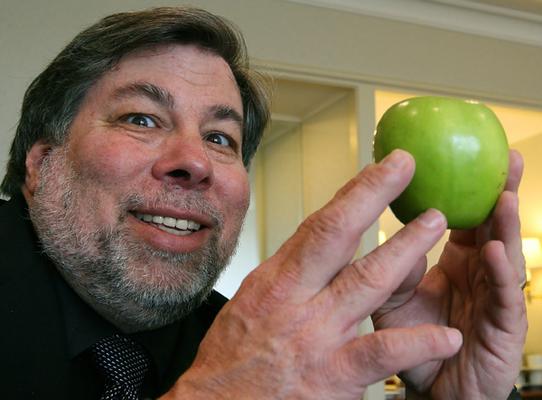
I consider the WOZ as one of the most inspiring person in the computer world. The man behind the technical genius of the Mac mainframe, he is referred as the other Steve. Co-founder of Apple Computers, the computer world will not be where it is right now if not for the the WOZ..

In 2000, he was inducted into the Inventors Hall of Fame and was awarded the prestigious Heinz Award for Technology, The Economy and Employment for “single-handedly designing the first personal computer and for then redirecting his lifelong passion for mathematics and electronics toward lighting the fires of excitement for education in grade school students and their teachers.”

A funny scene from the The Big Bang Theory... a cameo role of the Woz

2011-08-22

My Chocolate Hills Trip - The Bohol Escapade


Here are some wild pics of our Chocolate Hills Summer Trip!! This is totally a great experience seeing a true natural treasure. It opens my eyes to go travel again... :)

How to Improve your Skills as a Programmer


This will give you a few hints and some help to becoming a better programmer. So read on and enjoy! Programming can be a lot of fun.

Gather complete requirements.
Take the time to write down what the end product needs to achieve. Clarity of thought at this stage will save a lot of time down the line.
Write an implementation plan (or model).
  • For something small and self-contained, this might just be a basic flowchart or an equation.
  • For larger projects, it helps to break it into modules and consider what job each module must do, how data gets passed between modules, and within each module how it will function.
Add Comments to your code.
Whenever you feel your code needs some explanation, drop some comments in. Each function should be preceded by 1-2 lines describing the arguments and what it returns
Use naming conventions for variables.
It will help you keep track of what type the variable is and also what it's purpose is. Although this means more typing than x = a + b * c, it will make your code easier to debug and maintain.
Organize your code.
Use visual structure to indicate code structure. i.e. indent a code block that sits within a conditional (if,else,...) or a loop (for,while,...) Also try putting spaces between a variable name and an operator such as addition, subtraction, multiplication, division, and even the equal sign (myVariable = 2 + 2). As well as making the code more visually elegant, it makes it much easier to see the program flow at a glance.
Test
Start by testing it with inputs that you would typically expect. Then try inputs that arepossible but less common. This will flush out any hidden bugs. There is an art to testing and you will gradually build up your skills with practice.
Write your tests to always include the following:
  • Extremes: zero and max for positive values, empty string, null for every parameter.
  • Practice. Practice. Practice.

  • Be prepared for change.
In a realistic working environment, requirements change. However, the clearer you are at the start about the requirements and the clearer your implementation plan, the less likely those changes will be down to misunderstanding or "Ah, I hadn't thought of that" scenarios.You can take an active role in improving clarity of thinking by presenting your requirements document or your implementation plans before coding to ensure that what you are planning to create is actually what's been asked for.
Structure the project as a series of milestones with a demo for each block. Approach the programming one milestone at a time - the less you need to think about at any moment, the more likely you will think clearly.
  • Start simple and work towards complexity.
    When programming something complex, it helps to get the simpler building blocks in place and working properly first.

2011-08-20

Super Workspace Setup (Next Project)

My current workspace sucks... Ultimately sucks!! If there is a level of suckiness, my workspace is much lower.. Having a 17" CRT monitor, (man, get a life!!! CRT monitor!!! ), I almost puke on that one...

So finally decided, I will create a Superworkspace for my homebased programming. A workspace so cool, that just by looking at it I will definitely be inspired to work on and spend my waking hours in front of it. I have my ideas, my setup in mind.... I got a lot of inspiration online and here are some of them:

A dual monitor with a bookshelf by the side. This would work for me coz I love books ..

A multi-platform and a number of monitors is like a kick ASS setup... man with all those gadgets... I will have a happy techie life
A comfortable office like able is also cool.. Im not into gaming but still it will look good..

And a dark and gloomy setup, I kinda love this setup.


We this in mind, I will try to do my thing and get on with it.. Hopefully in 3 months time I could post my setup in my blog. It will be a very interesting 3 months for me.

2011-08-18

The Passion Of Programming (Repost)

I know this title sounds ultra-geeky. But this post is a retrospect on how cool it used to feel to write computer programs. Like most things in life, time (along with other things) wears down the enthusiasms associated with things you love to do.

For me, I can remember sitting in front of a Commodore 64 thinking up cool things to program. Writing programs that Poked/Peeked places on the monitor….that manipulated the cassette player input drive. Then getting a modem and actually connecting to CompuServe. Unbelievable.


In high school we had a TRS-80. We learned BASIC…and played a lot of Lunar Lander. That was a program where you tried to land on the moon, controlling thrust and descent. No real graphics….but it sure was fun.

Then, in the early and mid 80′s learning Pascal, C, Data Structures, Assembler, Fortran, and BASIC. It was still an incredible rush to figure out those oddball assignments like using recursion to simulate parking cars on the street. Then, one semester, we had to write our own compiler. Everyone was assigned to a team of three. My two partners were more interested in checking out the closest bar than writing the compiler. At the time I could not understand it. So, I wrote the compiler. How could anyone not want to solve this problem quickly??? A valuable lesson in life was learned.

Then, after graduation, came the hunt for a job. This is where I started to lose that enthusiasm. Each rejection letter seemed to take a little more out of me. Finally, I landed a cool job with a good company. I was sure I would enjoy this.

Another lesson hit me like a ton of bricks. I had to go to meetings? Fill out deliverable documents??? Only 25% of the time was spent programming? Wait a second. Then, over the years that 25% was whittled down to 20%, 18%, 10%, to now around 5%. For, you see, the skill of programming is not the highly valued skill it used to be. It has been commoditized. All development must be done according to strict rules and guidelines. The personal reward and gratification derived by the creativity and innovation has been almost completely stripped out.

This isn’t limited to a few companies. It is more and more common.

Yes, I know, I sound like a spoiled baby. “You still get paid a nice salary. If you don’t like it, leave.” I would….but with a family rooted in the area, that isn’t easy. And I really do like the company I work for….just wish I still had the passion I used to have.

I try to stay atune to programming by writing tools at home, as well as helping organizations and clubs who have purchased computers but need help realizing their true value. Helping people like that does give me a boost. There are some incredibly cool technologies now that make computer programming really interesting. Those keep me pumped, too.

Maybe it doesn’t have to do with programming at all. Maybe I just don’t want to grow up any more. I want to be that kid again.

Maybe I should go to ebay and start looking for a Commodore.

2011-08-14

I'm a Romantic Geek

Nobody could preg_replace() you in my heart, coz ur the perfect preg_match() for me. I wish you are here strtotime(now) and we could spend more mktime() . Once you fopen() my heart, dont break it for I will die() without you.
Dont strcmp() with others coz Im array_unique() and IM not just your random() partner... Im maybe different but but I will exceed your prev() and better than your next() for Im your current()

2011-08-10

Turn Disaster into Fortune


I'm a masochistic lion. I inflict pain to myself to give me the reason to redeem myself. I bleed, I cried, I scarred and I almost died. All for the sake of redemption. In order to feel pleasure, you must understand pain, in order to feel love you must first break your heart, in order to become successful, you must fail and in order to be happy, you must understand anguish.

This world works in pair, for you to understand the other, you must first understand the other. Insane you say, but that's reality. Once a disaster happens to one's life, it is just a matter of time that fortune befalls upon them. All you have to do is endure and persevere because as always, at the end of the dark tunnel, will be always the light...

Or it could be just another incoming train....

2011-08-01

I need Focus...

I need Focus... a lot of them .... Just finished 2 local projects.... 1 awaiting and 1 ongoing.... For these past few months due to unrelated and overly stupid reason, I've been delayed. All my fault, the blame is on me.... Having trouble getting pass a line, it hinders everything in me.. It leaves me drained, stressed, tired and couldn't concentrate. I daydream a lot, lost in my quicksand of thoughts, I spent a lot of time hoping.. Hoping that everything will still go back to everything that was once been.. and then it smacked me in the head bigtime.. I'm losing my grasp on reality...

Although it may seem strange to me, just realizing it when everything goes awry and falling into different places, it's like a scythe in my neck.. I felt fear, fear of what I would become if I allow myself to be in such a situation. A situation that I'm pretty much sure I'm not the first one, and will not be the last one.

I need concentration, a lot of them, to completely be engulfed with my works, to finished everything and hope to get a lot more of them.. I'm glad I have this chance. So please, Oh Heaven don't let me F#@ked up for some stupid reason that shouldn't have deserved the time it was given in the first place....